
from $199.99/mo
Microdose semaglutide
People comparing lower monthly cost, prior semaglutide response, nausea history, and weekly injection tolerance.
- Ingredient
- Semaglutide
- Receptor target
- GLP-1 receptor agonist
- Starting dose
- 0.25 mg once weekly
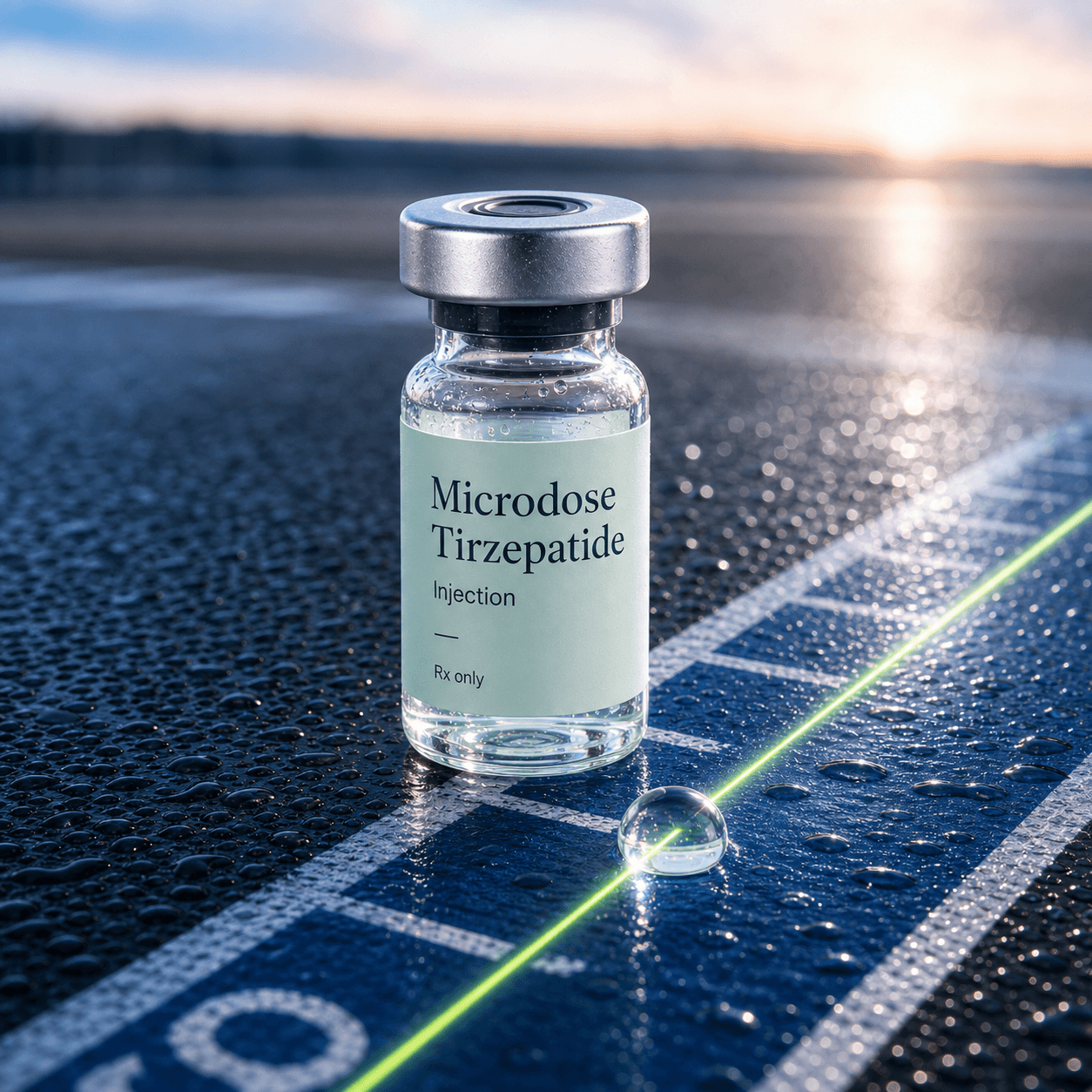
The dual GIP/GLP-1 medication behind Mounjaro and Zepbound, started lower and slower: 1 mg once weekly if prescribed, with appetite, nausea, and dose history deciding when — or whether — the dose moves.

Tirzepatide is prescription-only. A licensed provider reviews your health history before prescribing. Not for everyone; individual results vary.
Microdose tirzepatide is weekly GLP-1/GIP appetite care for people comparing a lower first dose, prior GLP-1 use, GI side effects, and monthly cost before choosing standard escalation.

This option starts at 1 mg once weekly, below the 2.5 mg branded starting dose people often compare against.

Cravings, portions, blood-sugar history, and prior GLP-1 use all change the tirzepatide decision.

Nausea, reflux, constipation, dehydration, medications, and dose history matter before holding or changing a weekly injection.

Protein, resistance training, dose tolerance, and weight trend belong in the same plan, especially when appetite drops.
The first dose, any hold, and any dose change depend on appetite response, nausea or reflux, constipation, medications, dose history, and the prescription that is actually written.
Tirzepatide acts on GLP-1 and GIP receptors. The microdose difference is pace: start from 1 mg when prescribed, watch appetite and side effects, then hold or change the weekly dose only when needed.

Receptors engaged — GIP and GLP-1 — versus one for older agents.
Half-life that supports once-weekly dosing.
Microdosing starts with the same practical review: appetite, prior use, medications, side-effect history, blood-sugar history, and whether you want a once-weekly injection.
People comparing lower monthly cost, prior semaglutide response, nausea history, and weekly injection tolerance.
People comparing dual-receptor tirzepatide, prior GLP-1 dose history, appetite goals, and GI side-effect history.
 GIP
GIP Week 1:
 Slower
The pharmacy label lists the concentration of tirzepatide, glycine, and B12, along with syringe units and the prescribed weekly amount.
A lower starting dose can change tolerance, but it does not remove GLP-1 risks. Medication history, blood-sugar history, pregnancy plans, and GI side effects still matter.
Current medications, diabetes history, prior GLP-1 dose, GI history, and contraindications can all change whether tirzepatide makes sense.
Nausea, reflux, constipation, dehydration, gallbladder issues, and rare serious reactions can still happen at lower starting doses.
Pregnancy plans, breastfeeding, anesthesia timing, and dose tolerance can change whether a weekly injectable GLP-1/GIP belongs in the plan.
Boxed warning, contraindications, serious side effects, medication history, pregnancy, breastfeeding, gallbladder, pancreas, kidney, and anesthesia considerations can all change whether GLP-1 care should move forward.

Share your appetite goals, prior GLP-1 use, current medications, side-effect history, and budget so the next step is not copied from a public dosing chart.